

Tumor-naïve multimodal profiling of circulating tumor DNA to detect minimal residual disease in solid tumors
Key finding:
The tumor-naïve method could be a reliable alternative to monitor ctDNA when obtaining high-quality tissue samples is challenging. The performance of this method was better in high ctDNA-shedding cancer or at the metastatic stage.Authors:
Tu Nguyen, Van-Anh Nguyen Hoang, Trong Hieu Nguyen, Trung Hieu Tran, Ngoc Nguyen, Tho Thi Le Vo, Duy Sinh Nguyen, Hoa Giang, Hoai-Nghia Nguyen, and Lan N. TuPublisher:Therapeutic Advances in Medical Oncology
Publication date:18 November 2025This publication supports for the following genetic testing:
Tumor Genomic and Transcriptomic Analysis Integrated With Liquid Biopsy ctDNA Monitoring: Analytical Validation and Clinical Insights
Key finding:
Comprehensive genomic profiling (CGP) is a time- and tissue- efficient method to help guide precision oncology. To enhance the clinical utility of CGP, we investigated the performance of a novel strategy integrating tumor DNA and mRNA profiling, together with liquid biopsy ctDNA monitoring. Comprehensive genomic and transcriptomic profiling could reliably unveil genetic details not provided by DNA-only CGP. The integration of ctDNA detection further helped detect tumor-agnostic mutations and monitor treatment response.Authors:
Nam H. B. Tran, Thien-Phuc Hoang Nguyen, Vinh Quang Bui, Vu Thuong Le, Trong Khoa Mai, Van-Anh Nguyen Hoang, Tien Anh Nguyen, Minh-Duc Nguyen, Ha-Hieu Pham, Tho Thi Le Vo, My T. T. Ngo, Du Quyen Nguyen, Duy Sinh Nguyen, Hoai-Nghia Nguyen, Minh-Duy Phan, Hoa Giang, Lan N. TuPublisher:Cancer Medicine
Publication date:08 December 2025This publication supports for the following genetic testing:

Multimodal analysis of cell-free DNA enhances differentiation of early-stage breast cancer from benign lesions and healthy individuals
Publisher:BMC Biology
Publication date:20 August 2025This publication supports for the following genetic testing:
Combination of BRCA deep targeted sequencing and shallow whole genome sequencing to detect homologous recombination deficiency in ovarian cancer
Key finding:
We developed an assay to accurately determine the homologous recombination deficiency status of ovarian tissue samples, including those with low DNA quality. This study was the first to analyze the prevalence and spectrum of homologous recombination deficiency in Vietnamese patients with ovarian cancer. Comprehensive assessment of homologous recombination deficiency should be performed instead of BRCA1/2 testing alone so that no patients miss their opportunity for PARPi treatment.Authors:
Thien-Phuc Nguyen Hoang , Nam H. B. Tran , Tien Anh Nguyen, My T. T. Ngo, Anh Duong Doan, Du Quyen Nguyen, Hung Sang Tang, Duy Sinh Nguyen, Cam Tu Nguyen Thi, Thanh Thuy Do Thi , Hoai-Nghia Nguyen, Hoa Giang and Lan N. TuPublisher:Frontier
Publication date:01 September 2025This publication supports for the following genetic testing:
Personalized mutation tracking in circulating-tumor DNA predicts recurrence in patients with high-risk early breast cancer
Key finding:
The clinical utilization of circulating tumor DNA (ctDNA) in breast cancer (BC) management is not well-defined. In this prospective study, 168 patients with early-stage BC were recruited, serial blood samples were collected before and after surgery. Tumor-informed ctDNA testing was performed, which sequenced tumors for 95 genes followed by bespoke mPCR to track 1–9 mutations in the plasma. ctDNA was detected before surgery in 14.6%, 40.0%, 83.8%, and 80.0% of HR+ low-risk, HR+ high-risk, HR-HER2+ and HR-HER2- patients, respectively. Pre-operative ctDNA positivity was significantly associated with decreased disease-free survival (DFS) (adjusted HR = 3.09, 95% CI 2.65–80.0, p = 0.001). After a median 26.6-month follow-up, 11 patients relapsed, and ctDNA at landmark time point 2–4 weeks after surgery was detected in 50.0% (5/10) of cases. Landmark ctDNA clearance was associated with significantly longer DFS (p = 0.0009) and positive ctDNA persistence after adjuvant therapy occurred in 36.4% (4/11) of stage-III patients. During surveillance, ctDNA detection had 90.9% sensitivity and 98.8% specificity to predict recurrence, and median lead time of 9.7 months. Patients with detected ctDNA had shorter DFS than those with undetectable ctDNA (adjusted HR = 207.05, 95% CI 41.38- > 1000, p = 0.001). Therefore, ctDNA status both before and after surgery could help stratify recurrence risk for BC patients.Authors:
Sao Trung Nguyen, Van-Anh Nguyen Hoang, Vu Nguyen Trieu, Thanh Huyen Pham, Thi Cuc Dinh, Dinh Hoang Pham, Ngoc Nguyen, Dao Nguyen Vinh, Thanh Thuy Thi Do, Duy Sinh Nguyen, Hoai-Nghia Nguyen, Hoa Giang & Lan N. TuPublisher:npj Breast Cancer
Publication date:20 June 2025This publication supports for the following genetic testing:
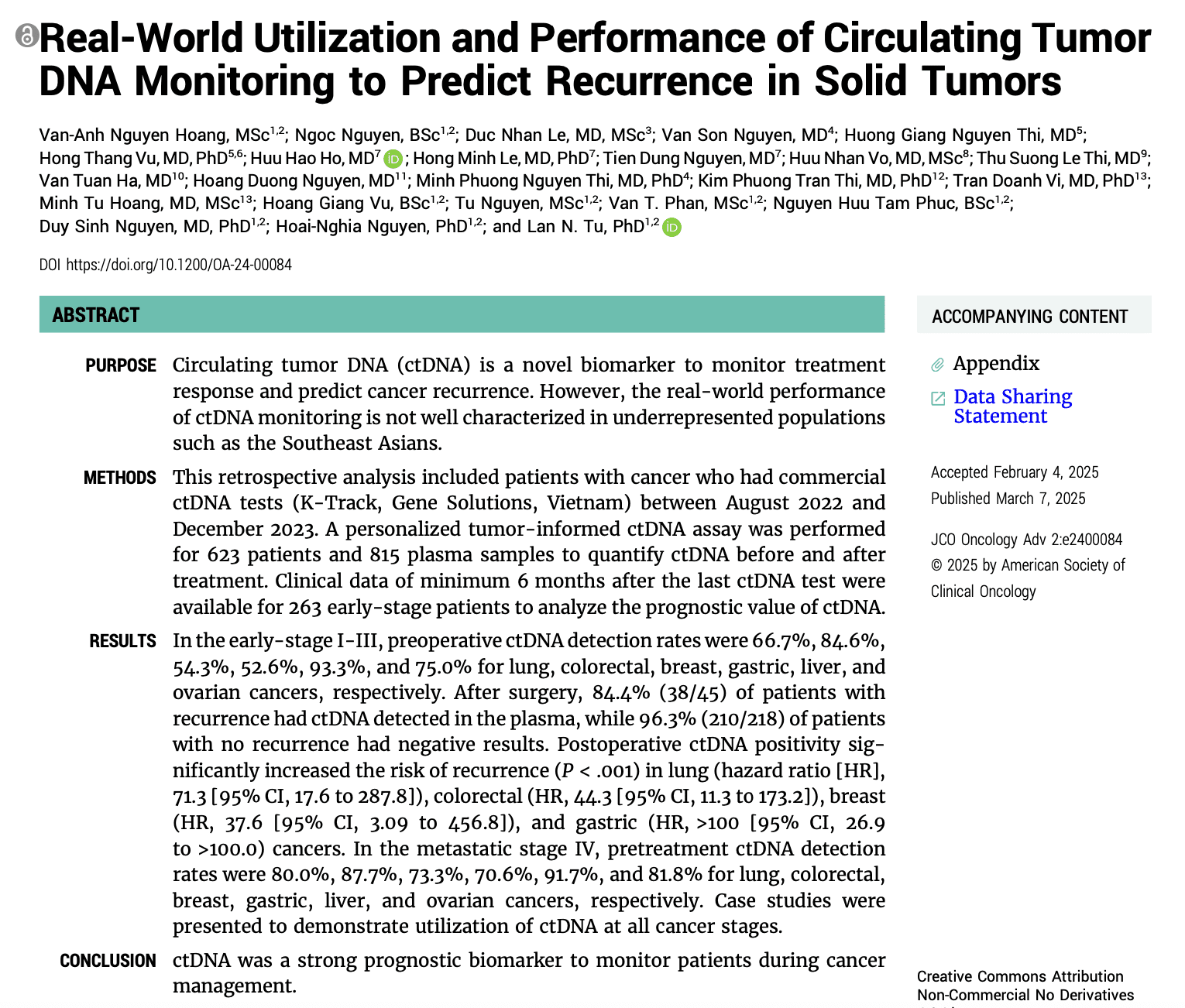
Real-World Utilization and Performance of Circulating Tumor DNA Monitoring to Predict Recurrence in Solid Tumors
Key finding:
In the early-stage I-III, preoperative ctDNA detection rates were 66.7%, 84.6%, 54.3%, 52.6%, 93.3%, and 75.0% for lung, colorectal, breast, gastric, liver, and ovarian cancers, respectively. After surgery, 84.4% (38/45) of patients with recurrence had ctDNA detected in the plasma, while 96.3% (210/218) of patients with no recurrence had negative results. Postoperative ctDNA positivity significantly increased the risk of recurrence (P 100 [95% CI, 26.9 to >100.0) cancers. In the metastatic stage IV, pretreatment ctDNA detection rates were 80.0%, 87.7%, 73.3%, 70.6%, 91.7%, and 81.8% for lung, colorectal, breast, gastric, liver, and ovarian cancers, respectively. Case studies were presented to demonstrate utilization of ctDNA at all cancer stages.Authors:
Van-Anh Nguyen Hoang, MSc; Ngoc Nguyen, BSc; Duc Nhan Le, MD, MSc; Van Son Nguyen, MD; Huong Giang Nguyen Thi, MD; Hong Thang Vu, MD, PhD; Huu Hao Ho, MD; Hong Minh Le, MD, PhD; Tien Dung Nguyen, MD; Huu Nhan Vo, MD, MSc; Thu Suong Le Thi, MD; Van Tuan Ha, MD; Hoang Duong Nguyen, MD; Minh Phuong Nguyen Thi, MD, PhD; Kim Phuong Tran Thi, MD, PhD; Tran Doanh Vi, MD, PhD; Minh Tu Hoang, MD, MSc; Hoang Giang Vu, BSc; Tu Nguyen, MSc; Van T. Phan, MSc; Nguyen Huu Tam Phuc, BSc; Duy Sinh Nguyen, MD, PhD; Hoai-Nghia Nguyen, PhD; and Lan N. Tu, PhDPublisher:JCO Oncology Advances
Publication date:07 March 2025This publication supports for the following genetic testing:
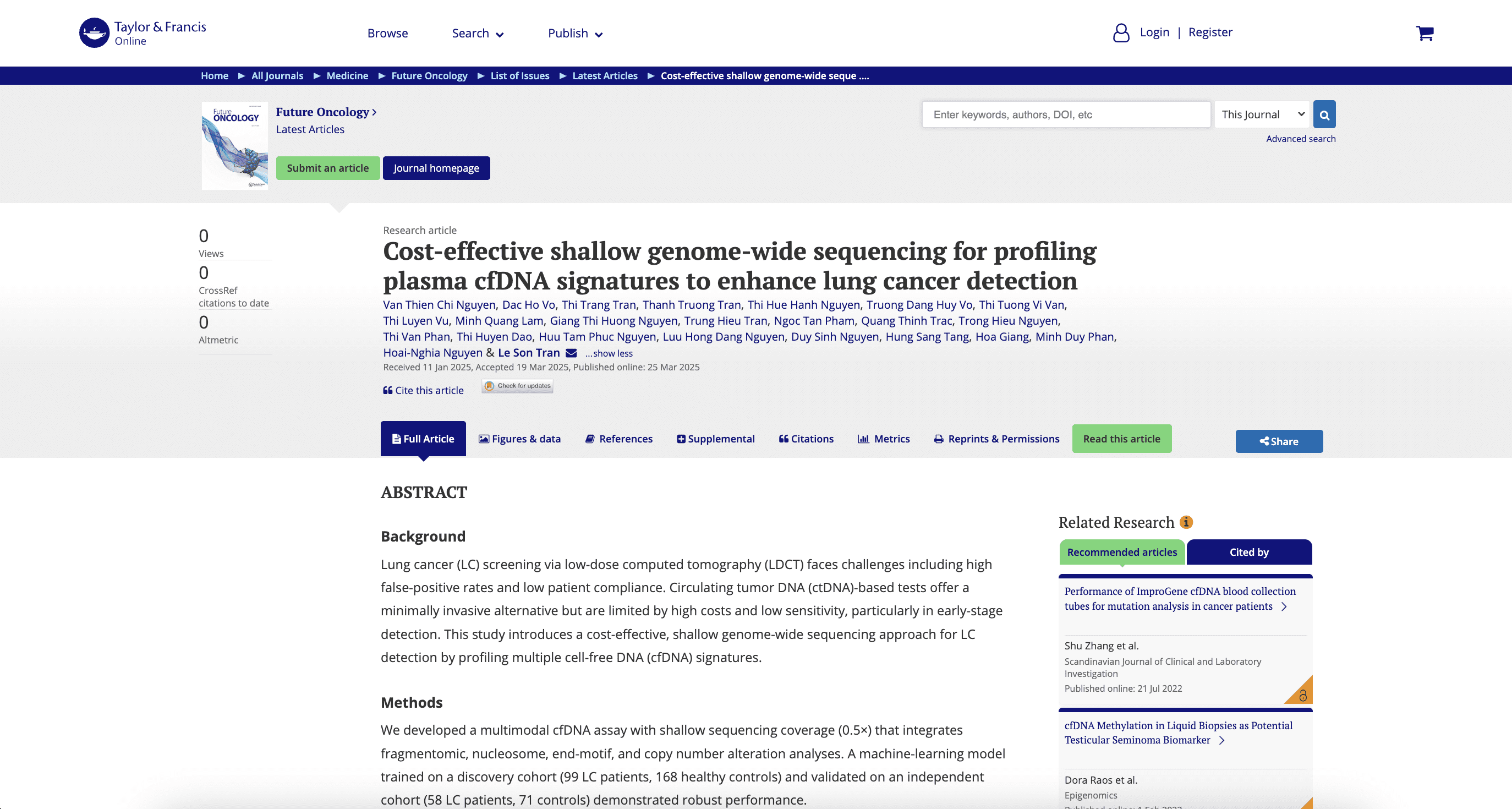
Cost-effective shallow genome-wide sequencing for profiling plasma cfDNA signatures to enhance lung cancer detection
Publisher:Future Oncology
Publication date:25 March 2025This publication supports for the following genetic testing:

Prospective validation study: a non-invasive circulating tumor DNA-based assay for simultaneous early detection of multiple cancers in asymptomatic adults
Publisher:BMC Medicine
Publication date:14 February 2025This publication supports for the following genetic testing:

Combination of Hotspot Mutations With Methylation and Fragmentomic Profiles to Enhance Multi-Cancer Early Detection
Publisher:Cancer Medicine
Publication date:03 January 2025This publication supports for the following genetic testing:
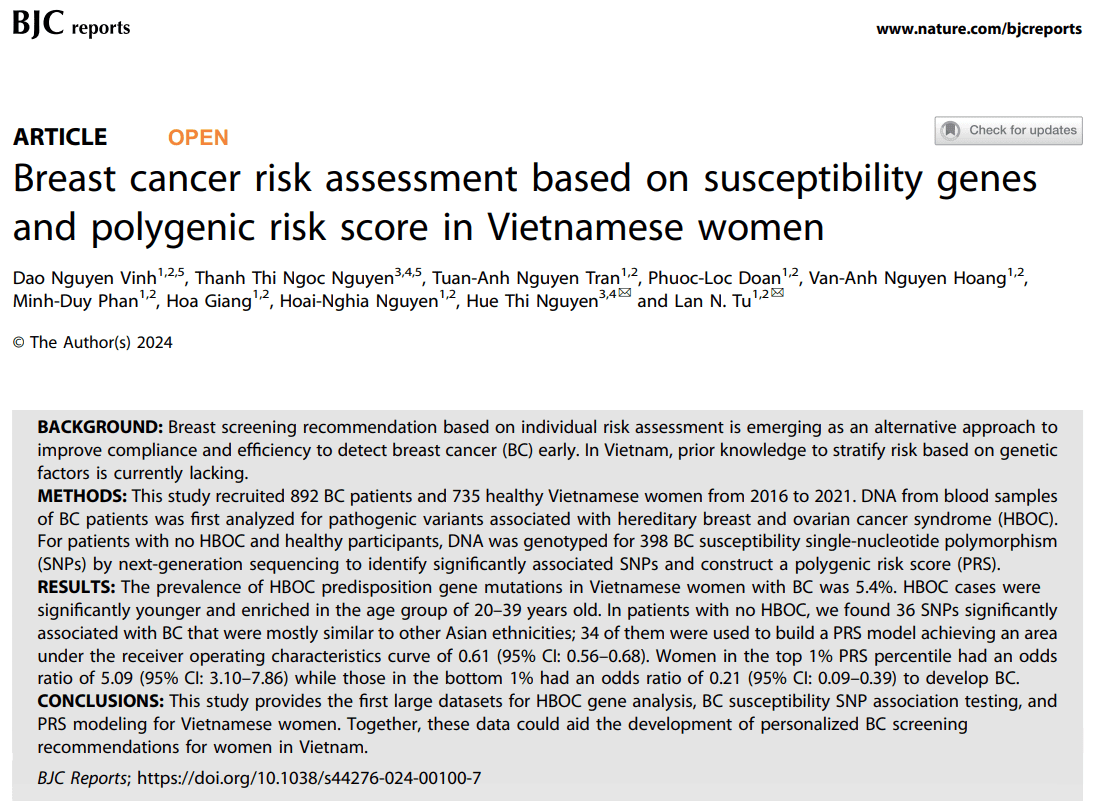
Breast cancer risk assessment based on susceptibility genes and polygenic risk score in Vietnamese women
Key finding:
This study provides the first large datasets for HBOC gene analysis, BC susceptibility SNP association testing, and PRS modeling for Vietnamese women. Together, these data could aid the development of personalized BC screening recommendations for women in Vietnam.Authors:
Dao Nguyen Vinh, Thanh Thi Ngoc Nguyen, Tuan-Anh Nguyen Tran, Phuoc-Loc Doan, Van-Anh Nguyen Hoang, Minh-Duy Phan, Hoa Giang, Hoai-Nghia Nguyen, Hue Thi Nguyen and Lan N. TuPublisher:BJC Reports
Publication date:08 October 2024This publication supports for the following genetic testing:
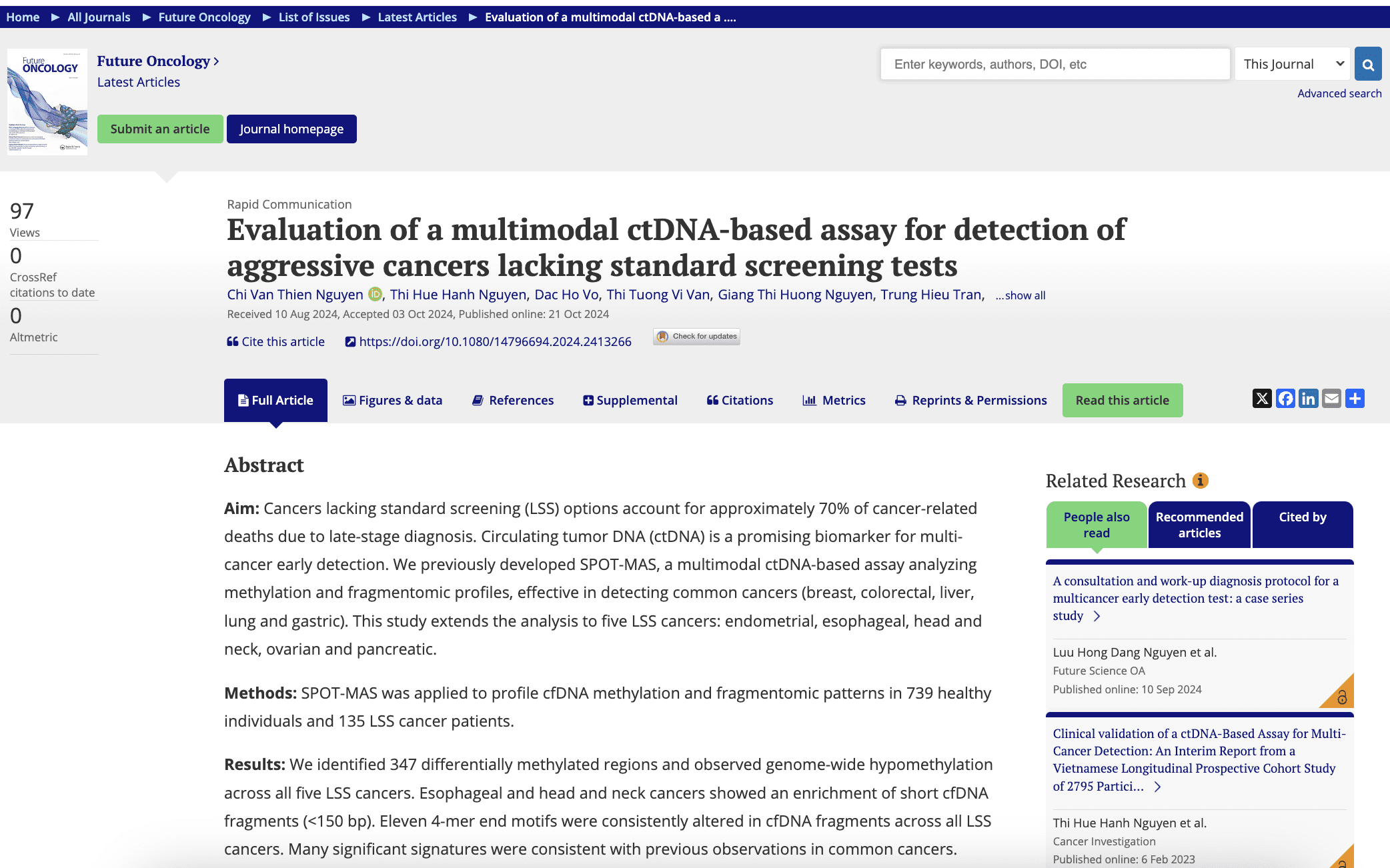
Evaluation of a multimodal ctDNA-based assay for detection of aggressive cancers lacking standard screening tests
Publisher:Future Oncology
Publication date:21 October 2024This publication supports for the following genetic testing:
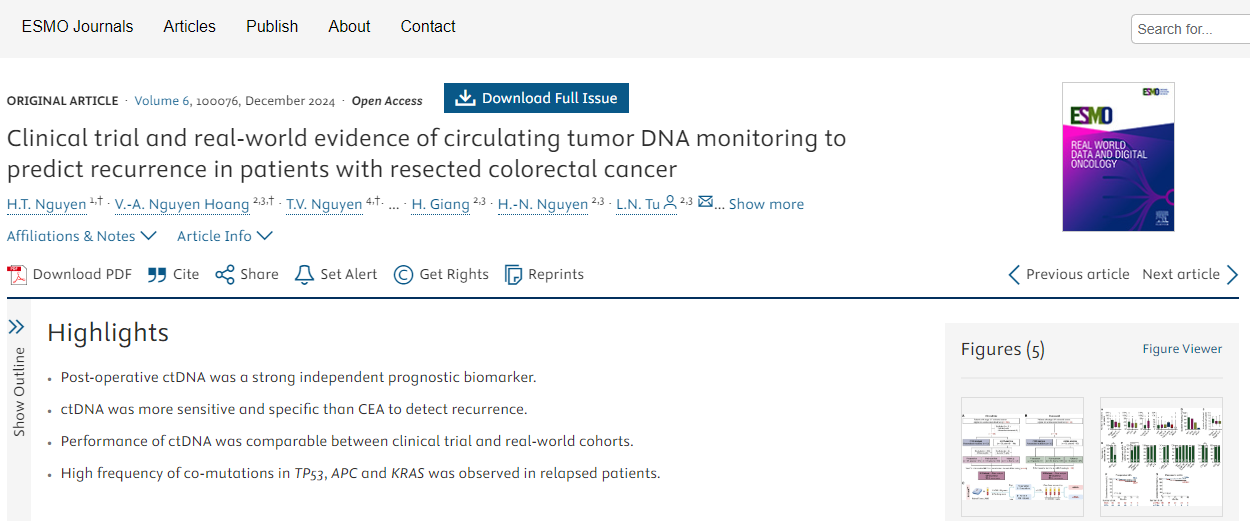
Clinical trial and real-world evidence of circulating tumor DNA monitoring to predict recurrence in patients with resected colorectal cancer
Key finding:
Circulating tumor DNA (ctDNA) is a novel biomarker for predicting recurrence in colorectal cancer (CRC). Analysis from both clinical trials and real-world data indicates that ctDNA serves as an independent and strong prognostic biomarker for CRC recurrence. ctDNA testing may aid clinical decision-making by supporting personalized intervention and surveillance strategies.Authors:
H. T. Nguyen, V.-A. Nguyen Hoang, T. V. Nguyen , N. A. L. Trinh, T. H. Pham, D. N. Le, H. H. Ho, T. D. Nguyen, H. D. Nguyen, T. S. L. Thi, N. Nguyen, D. H. Tran, M. T. Le, T. C. Dinh, T. S. Nguyen, K. C. N. The, H. Mai, M. T. Chu, D. H. Pham, N. H. T. Phuc, D. N. Vinh, D.-N. Nguyen, X.-V. Nguyen, D. S. Nguyen, T. T. D. Thi, H. Giang, H.-N. Nguyen & L. N. TuPublisher:ESMO Real World Data and Digital Oncology
Publication date:24 September 2024This publication supports for the following genetic testing:
1
2
3


