
Role of ctDNA in Cancer Screening and Personalized Treatment in Asia: Three Takeaways from Experts
Circulating tumor DNA (ctDNA) is revolutionizing cancer detection and precision oncology. At the partnership signing event hosted by Gene Solutions and August Global Partners (AGP), we brought together experts to discuss the transformative role of ctDNA in cancer care.
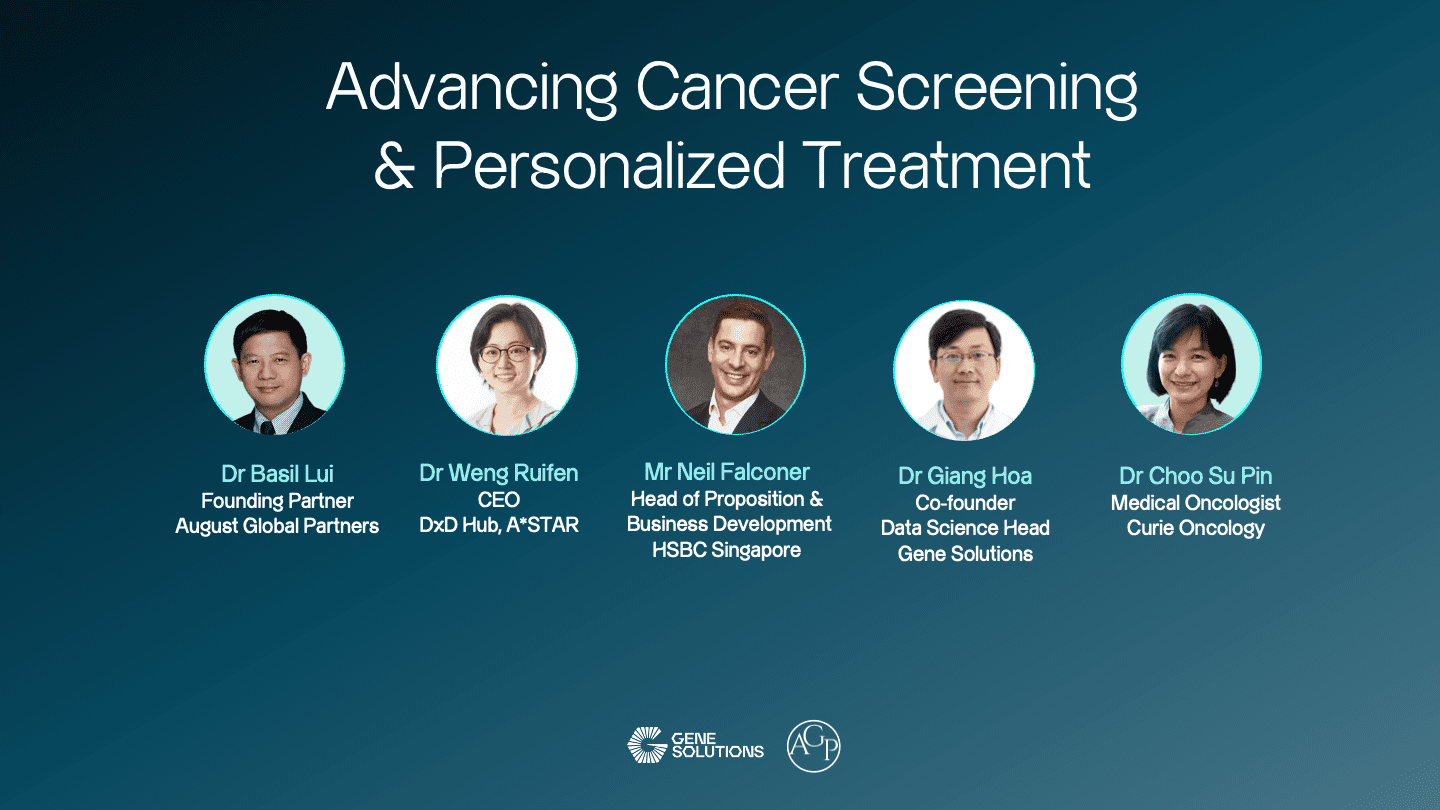
Dr. Basil Lui, Founding Partner at AGP moderated a vibrant discussion with four panelists: Dr. Choo Su Pin, Medical Oncologist at Curie Oncology, Singapore; Dr. Weng Ruifen, CEO at DxD Hub (a national platform hosted by A*STAR), Singapore; Dr. Giang Hoa, Data Science Head at GS; and Mr. Neil Falconer, Head of Proposition and Business Development at HSBC Singapore.
ctDNA screening tests may be helpful for high-risk patients with inconclusive finding
Highlighting the benefit of using ctDNA-based Next-Generation Sequencing (NGS) as a companion tool to conventional methods in ambiguous lung cases, Dr. Choo shared an example of a smoker with a lung nodule that couldn’t be confirmed as cancerous through imaging. “An NGS-based blood test can provide critical insights. A positive result would prompt further diagnostics and early treatment, while a negative result could support a watchful waiting approach, reducing patient’s anxiety.” Dr. Choo explained.
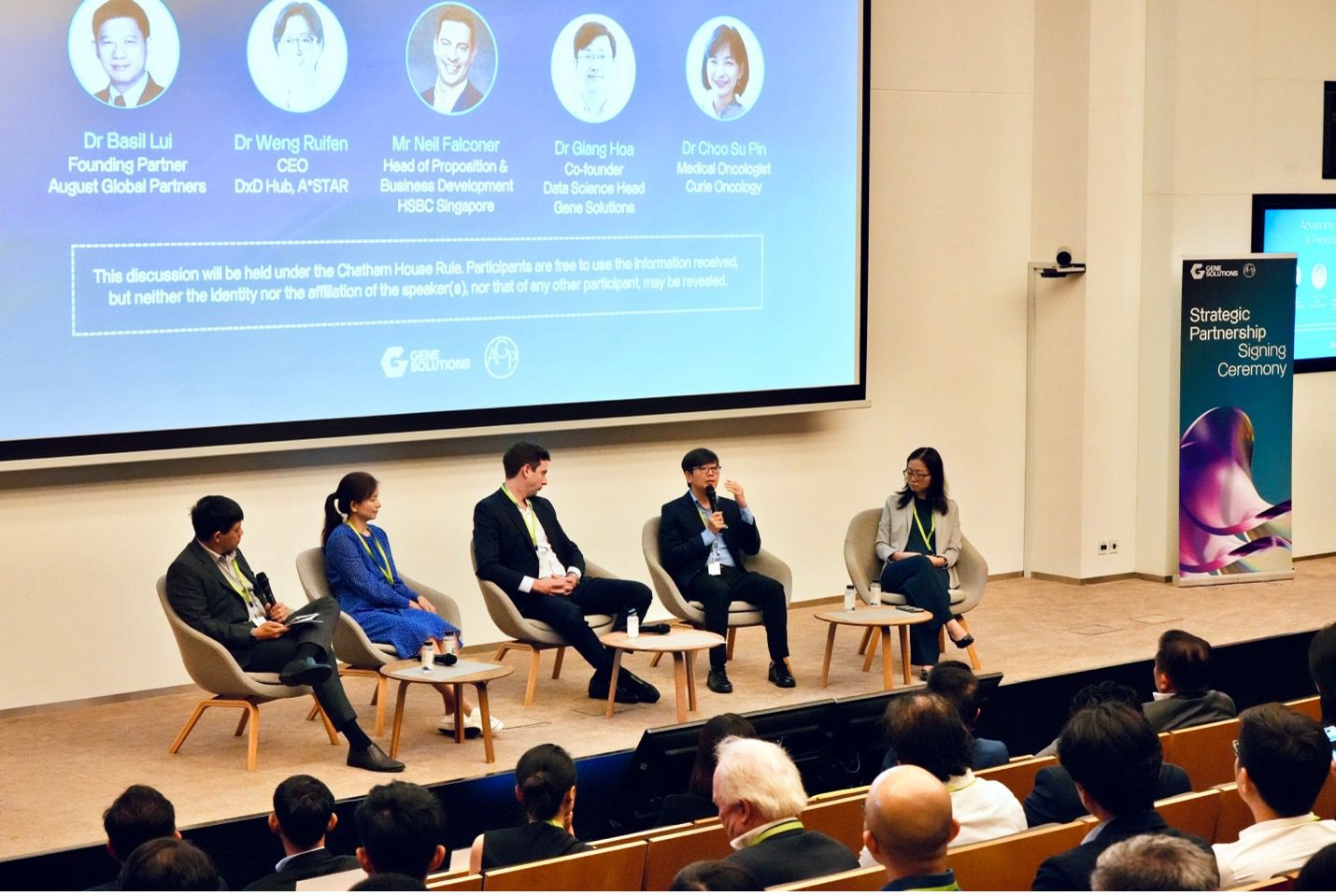
Dr. Choo also emphasized the potential of ctDNA testing for multi-cancer screening, particularly for high-risk groups like individuals with BRCA mutations. “These individuals face significant screening needs across multiple cancers, such as pancreatic, breast, ovarian, and prostate. A blood-based NGS test could complement and reduce the burden of undergoing multiple traditional procedures,” she noted.
ctDNA profiling enables targeted therapy and reduces unnecessary treatments
The discussion also highlighted the pivotal role of ctDNA in personalized cancer treatment, where genomic profiling has transformed traditional approaches.
“It’s not about whether the cancer is in the colon or lung; it’s about addressing the molecular signature driving the disease. These ctDNA tests add to our knowledge and ability to better tailor treatments for patients” Dr. Choo shared.

She also underscored the importance of ctDNA testing in detecting minimal residual disease (MRD), which helps determine whether chemotherapy is necessary. “For high risk stage II colon cancer, if we do this test, we can potentially avoid unnecessary chemotherapy. Without the test, standard practice is that everyone receives chemotherapy, but if a patient has no minimal residual disease, we may be overtreating them” she explained.
We need affordable tests backed by cost-effectiveness analysis
While all four experts agreed on the value of ctDNA-based blood tests, they acknowledged cost as a major barrier. Dr. Giang Hoa shared that artificial intelligence (AI) and machine learning can make these tests more cost-effective and reliable: “By leveraging AI, we’ve developed learning models that reduce false positives and negatives, enabling more reliable diagnostics. By continuously retraining these models with new data, we are achieving ever-greater precision while being able to gradually reduce sequencing cost.” he said.
Dr. Weng highlighted the need for health economic studies to prove the long-term value of these DNA applications. “We must show that these tests improve outcomes and lower overall healthcare costs for consideration towards widespread adoption,” she explained.
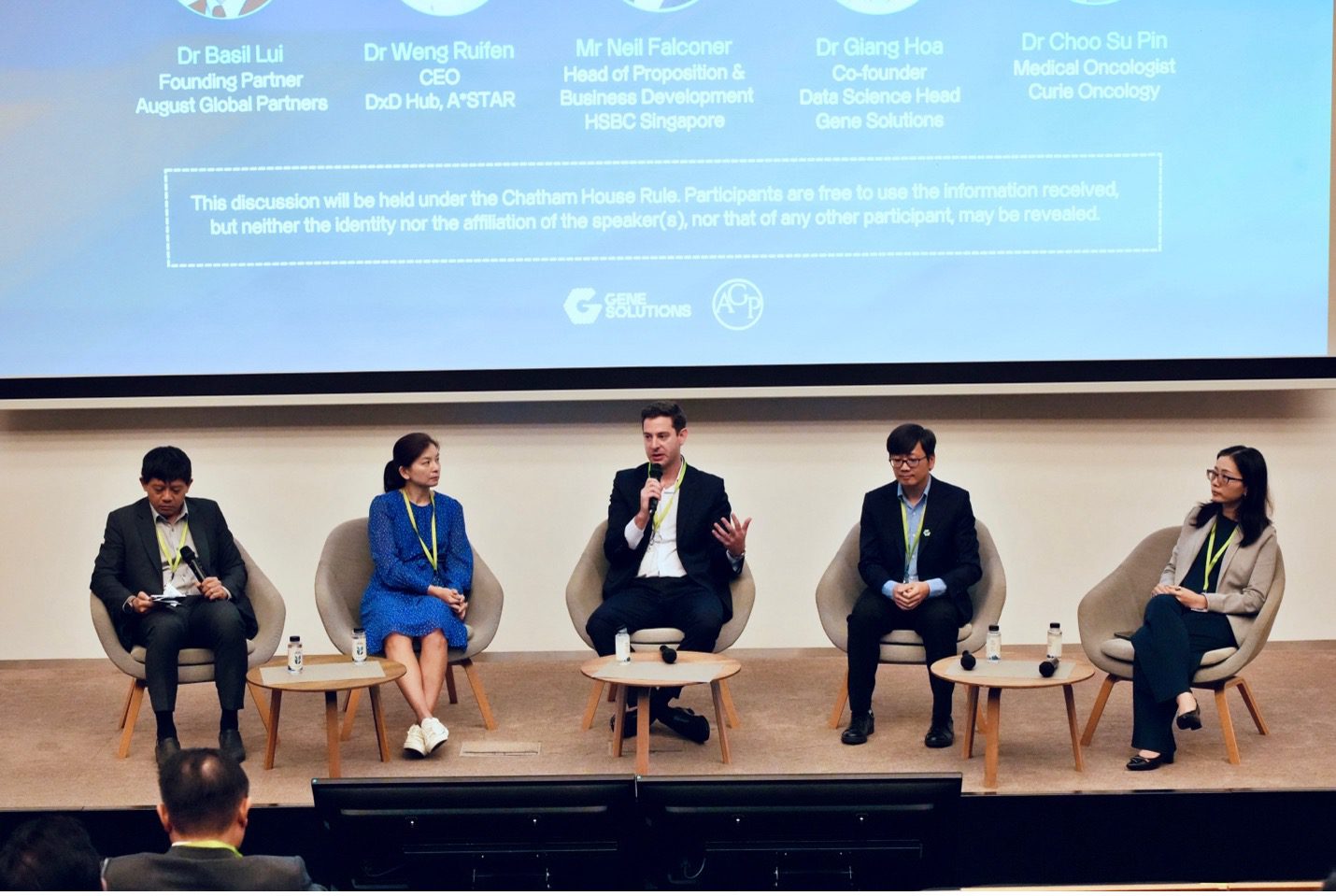
From a financial standpoint, Mr. Neil Falconer shared HSBC’s commitment to funding healthcare innovators. “Fast-growing companies like Gene Solutions need capital to scale before becoming profitable. Our New Economy Fund was created to support businesses like these at every growth stage, enabling their expansion across Southeast Asia,” he said.
Advancing cancer care in Asia
In his closing remarks, Dr. Basil Lui summarized the discussion, highlighting the transformative potential of reliable and affordable AI-driven ctDNA tests for early cancer detection and personalized treatment. He stressed the importance of collaboration among healthcare providers, financial institutions, researchers and regulators to drive adoption and improve cancer care.
The event showcased advancements in cancer screening and treatment while reinforcing a shared commitment to better patient outcomes across Asia. As the panelists emphasized, the future of cancer care lies in cost-effectiveness, personalization, innovation, and collaboration.


