
Best of K‑CONNECT Summit 2026: Translating Multi-omics and AI Into Real-World Precision Oncology
At the K-CONNECT Summit 2026 in Da Nang, more than 250 international experts attended onsite, while over 1,000 participants joined online to explore how multi-omics, liquid biopsy, and Artificial Intelligence (AI) can be translated into clinical practice in ways that are useful and scalable for patients.
During the Academic Day, held under the theme “AI & Multi-omics: Shifting Paradigms in the New Era of Early Cancer Detection and Precision Oncology,” the program traced a clear arc across three sessions: from finding cancer earlier, to understanding it more completely, to acting on molecular signals with greater confidence over time. The shared message was practical: precision oncology is moving beyond reliance on a single test at diagnosis toward a continuous, data‑driven model of care designed to keep pace with tumor evolution.
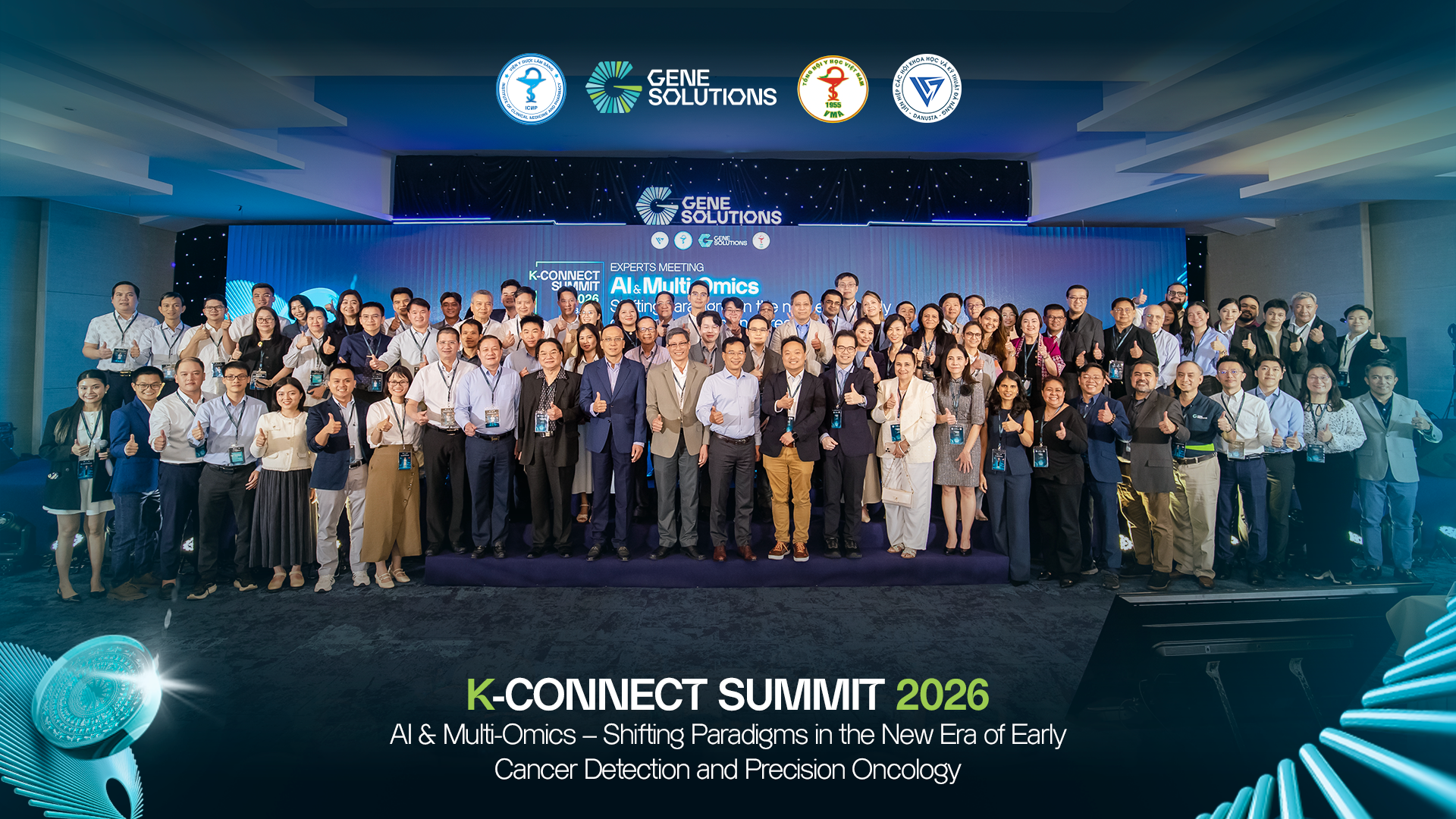
Opening Remarks and Keynote Address
The Academic Day opened with remarks from Dr. Tu Do Anh (Vietnam National Cancer Hospital – K Hospital, Vietnam), emphasized the importance of regional collaboration in advancing precision oncology across Asia. Dr. Tu highlighted the shift toward integrated, AI-enabled, and multi-omics–driven care, supported by strong evidence, partnerships, and locally relevant implementation. This vision served as a central driver behind the establishment of the K-CONNECT platform.
Prof. Herbert Ho Fung Loong (The Chinese University of Hong Kong, Hong Kong) delivered a keynote on “circulating tumor DNA (ctDNA) and Multi-omics in Precision Medicine.” He defined precision medicine as tailoring treatment through integrated genomic, molecular, and clinical data, while highlighting key challenges such as tumor heterogeneity, treatment resistance, limited tissue, and gaps in real-time monitoring. He positioned liquid biopsy as an essential, minimally invasive component that provides complementary information from earlier diagnosis, minimal residual disease (MRD) assessment to treatment selection, and monitoring. He also emphasized the potential value of integrating multi-omics with AI to enable more proactive, data-driven cancer care.
Watch Full Keynote Presentation: Click here
Session I: ctDNA & AI — The Shifting Paradigm of Early Cancer Screening in Modern Medicine
The first session began with a common clinical challenge: the “gray zone” in lung cancer screening. Prof. David CL Lam (The University of Hong Kong, Hong Kong) stated that while low-dose CT (LDCT) has improved early detection, incidental lung nodules remain common and often difficult to interpret. He highlighted the potential role of ctDNA, and multi-omics approaches in helping to address this clinical “gray zone,” particularly for individuals with suspicious nodules. While detecting ctDNA in early-stage cancer has historically been challenging due to low tumor burden, Prof. Lam noted that ongoing advances in biomarker discovery and emerging technologies are steadily improving performance: “Ongoing advances in biomarker discovery and emerging technologies are creating new opportunities to enhance the effectiveness of early lung cancer detection, particularly through circulating tumor DNA (ctDNA).” Importantly, Prof. Lam positioned AI-powered multi-omics ctDNA assays, including single-cancer early detection (SCED) and multi-cancer early detection (MCED) approaches, should be used as a complement to LDCT rather than a replacement. His team is currently evaluating these technologies in patients with suspicious lung nodules, with further results expected soon.
Building on this clinical need, Dr. Le Son Tran (Gene Solutions) transitioned the discussion from clinical challenges to technological innovation, describing Multi-Cancer Screening as a potential “game changer,” particularly for cancers that currently lack effective screening options. He noted that ctDNA signals in early-stage tumors are often low and variable, requiring high sensitivity without compromising specificity. To address this challenge, he highlighted the potential of combining multi-omics analysis with AI-driven machine learning. Dr. Tran presented SPOT-MAS, a blood-based assay designed to screen for 10 cancer types through a single blood draw. The platform integrates genetic, epigenetic, and fragmentomic signatures of cell-free DNA (cfDNA) with AI-powered algorithms to optimize detection performance and predict the tissue of origin. Supporting evidence comes from the prospective K-DETEK study, which enrolled more than 9,000 asymptomatic participants and demonstrated 78% sensitivity and 99% specificity, including strong performance in early-stage asymptomatic cancers. “We believe that multi‑omics analysis of cfDNA combined with machine learning and a simple workflow could be considered the next generation of MCED assays.” he summarized.
The conversation then moved from innovation to implementation. Prof. Sumei Cao (Sun Yat-sen University Cancer Center, China) focused on the real-world challenges of implementing cancer screening at scale. Using China’s urban cancer screening program as an example, she described a risk-stratified approach that combines digital tools, structured questionnaires, biological testing, and referral pathways to ensure high-risk individuals receive appropriate follow-up. The goal is to build an efficient population-based screening framework that optimizes healthcare resources. Looking ahead, Prof. Cao highlighted the potential of ctDNA-based MCED technologies to further strengthen risk stratification and complement existing screening programs in China. She noted, “As one of the most promising new technologies, I believe multi‑cancer early detection using ctDNA represents a highly efficient way to advance these goals.”
Expanding the lens further, Prof. Herbert Ho Fung Loong (The Chinese University of Hong Kong, Hong Kong) shifted the discussion from technical advances to the broader health-economic impact of cancer screening. He emphasized that early detection not only has the potential to improve clinical outcomes but also reduces the significant financial and societal burden associated with advanced-stage disease. Prof. Loong highlighted the promise of MCED to shift cancer diagnosis toward earlier stages, enabling more curative treatment opportunities. He also noted that blood-based screening approaches may offer greater accessibility and scalability, particularly in regions with limited imaging infrastructure and resources. “Late‑stage cancer treatment can cost two to three times more than early intervention, underscoring the value of ctDNA‑based MCED in shifting cancer detection toward earlier and more treatable stages.”
Moderated by Prof. Herbert Ho Fung Loong, the session I panel discussion-featuring Prof. David CL Lam, Prof. Sumei Cao, Dr. Le Son Tran, Assoc. Prof. Huy Trinh Le, Prof. Thinh Nguyen Huu (University Medical Center HCMC, Vietnam), Dr. Malwinder Singh Sandhu (Pantai Hospital Kuala Lumpur, Malaysia) and Dr. Dang LH Nguyen (Gene Solutions)—reinforced the importance of real-world validation in driving of multi-omics ctDNA-based screening technologies. As Dr. Dang LH Nguyen noted, “The consistency between clinical validation and real-world performance is helping bridge the gap between research and routine clinical practice, while also supporting future healthcare adoption.”
Watch Full Presentations:
| No. | Topic & Speaker | Recorded presentation |
| 1 | The Clinical Utility of ctDNA in Early Cancer Screening: Clinical Evidence & Real-world Practice
David CL Lam – The University of Hong Kong (HKU) |
Click here |
| 2 | Cancer Screening Strategies for High-Risk Populations: Practical Implementation Experience from Southern China
Sumei Cao – Sun Yat-sen University Cancer Center |
Click here |
| 3 | Integrating AI Capabilities and Multi-omics ctDNA Analysis in Multi-Cancer Screening
Le Son Tran – Gene Solutions |
Click here |
| 4 | Cancer Screening in Modern Medicine: ctDNA Applications & Health Economic Perspectives
Herbert Ho Fung Loong – The Chinese University of Hong Kong (CUHK) |
Click here |
Session II: Global Trends in Cancer Management – ctDNA & AI in Comprehensive Genomic & Transcriptomic Profiling
The second session turned to comprehensive genomic and transcriptomic profiling and the growing role of ctDNA in cancer management.
Dr. Vaibhav Choudhary (Nanavati Max Super Specialty Hospital, India) offered a decade‑spanning perspective on the evolution of in precision oncology. He noted: “A decade ago, we were asking whether comprehensive genomic profiling (CGP) was ready for prime time. Today, we are asking whether we should act on ctDNA-MRD.” He described ctDNA as “real-time genomic interrogation,” capable of revealing tumor heterogeneity and evolution beyond tissue biopsy. Its key roles include blood-based CGP for actionable mutations when tissue is limited and MRD assays for early longitudinal monitoring and treatment response monitoring. He reinforced a complementary “both/and” approach: tissue for established biomarkers and ctDNA for surveillance and resistance detection. While highlighting challenges such as low-shedding tumors and Clonal Hematopoiesis of Indeterminate Potential (CHIP), he noted that multi-omics and AI are improving sensitivity and specificity.
Dr. Lan Tu (Gene Solutions) highlighted three key shifts shaping precision oncology, reflected in the K‑4CARE platform integrating DNA, RNA, and ctDNA monitoring. First, she described the move from single-gene testing to combined genomic and transcriptomic profiling, as DNA identifies mutations while RNA enhances fusion detection and expression-level insight; combined analysis, as demonstrated in Dr. Lan Tu’s study in Cancer Medicine, improves sensitivity, reduces false negatives, and allows for highly accurate tissue-of-origin prediction. Second, she described the transition from static tissue profiling to dynamic ctDNA monitoring, enabling real-time tracking of tumor evolution and earlier detection of resistance. Third, she outlined a shift beyond mutation-centric analysis toward multi-layer ctDNA features—such as genome-wide features (fragmentomics, copy number alterations, and end motifs)—integrated with AI to enhance ctDNA signal detection and minimize noise like CHIP. Supporting data from her team published in JTO Clinical and Research Reports showed that incorporating these broader features improved performance, allowing tumor-informed and tumor-naïve approaches to achieve similar sensitivity (86.7% vs. 80.0%) and identical specificity (98.4%) in lung cancer. She concluded by stressing the need to balance multi-omics complexity with cost, turnaround time, and clinically meaningful biomarker coverage.
Assoc. Prof. Vu Le Thuong (University of Medicine and Pharmacy Hospital at Ho Chi Minh City – UMP, Vietnam) illustrated the practical application of comprehensive profiling through a lung cancer case, highlighting the need for both breadth of testing to identify actionable targets and depth of monitoring to detect meaningful changes over time. Using the K‑4CARE platform, integrated tissue (DNA+RNA) and liquid biopsy profiling with ctDNA monitoring informed initial treatment and follow-up strategies. Baseline testing identified an EGFR-sensitizing mutation alongside TP53 co-alterations, refining prognosis and surveillance intensity. During treatment monitoring, both imaging and ctDNA showed response, with a significant decline in ctDNA levels. Importantly, serial ctDNA monitoring detected early resistance signals before radiographic progression. Concluding from the case, he notes, “This case underscores the unique value of ctDNA in tracking disease dynamics—capturing both quantity (tumor burden changes) and quality (emergence of resistance mutations).”
Assoc. Prof. Huy Trinh Le (Hanoi Medical University, Vietnam) expanded the discussion to gastrointestinal cancers, highlighting the critical role of advanced biomarkers in stratifying patients, guiding treatment decisions, and predicting outcomes. He reviewed key biomarkers for colorectal and gastric cancers and illustrated their application through two stage III colorectal cancer cases using combined tissue and liquid biopsy CGP with ctDNA monitoring via the K‑TRACK platform. In both cases, tissue and liquid biopsy CGP enabled comprehensive molecular risk stratification and informed treatment planning, while ctDNA proved valuable for detecting minimal residual disease. As he concluded, “From a prognostic perspective, patients with positive ctDNA after curative treatment have significantly worse survival outcomes.”
In the panel discussion, moderated by Dr. Kha Vo Van (Can Tho Oncology Hospital, Vietnam), panelists-including Dr. Vaibhav Choudhary, Dr. Lan Tu, Assoc. Prof. Vu Le Thuong, Assoc. Prof. Huy Trinh Le, Dr. Luangyot Thongthieang (Khon Kaen Hospital, Thailand), and Asst. Prof. Nai-Jung Chiang (Taipei Veterans General Hospital, Taiwan)—converged on three systemic constraints: cost and reimbursement, long turnaround times, and the need for stronger platform validation and standardization, particularly outside major referral centers. Clinically, CGP is becoming increasingly routine in advanced disease, while ctDNA-based MRD testing may be especially impactful in early-stage risk stratification; discordant tissue and liquid findings should be interpreted in clinical context rather than privileging a single assay. A lung case shared by Dr. Luangyot Thongthieang illustrated how serial ctDNA via the K-TRACK platform clarified uncertain imaging, where declining tumor fraction (6.06% to 0.05%) supported continued treatment despite apparent progression. Gastrointestinal cases by Asst. Prof. Nai-Jung Chiang demonstrated how deeper sequencing influences interpretation and how ctDNA detects residual disease, though low shedding remains a challenge. Overall, Session II highlighted that progress will depend not only on improved tests but also on standardization, clinical pathways, and broader access, with the integration of tissue profiling, ctDNA, multi-omics, and AI enabling earlier detection and more actionable insights.
Watch Full Presentations:
| No. | Topic & Speaker | Recorded presentation |
| 1 | Comprehensive Genomic Profiling and ctDNA Monitoring: Clinical Insights and Applications Across Solid Tumors
Vaibhav Choudhary – Nanavati Max Super Speciality Hospital |
Click here |
| 2 | Multi-omics and AI in ctDNA Monitoring & CGTP: Technological Perspectives and Clinical Applications
Lan Tu – Gene Solutions |
Click here |
| 3 | Lung Cancer Clinical Case: Concurrent RNA and DNA Sequencing
Vu Le Thuong – University Medical Center Ho Chi Minh City |
Click here |
| 4 | Gastrointestinal Cancer Clinical Case: The Role of ctDNA, TMB, and MSI-H in Treatment Selection
Huy Trinh Le – Hanoi Medical University Hospital |
Click here |
| 5 | Panel Discussion: Lung Cancer Cases Sharing
Luangyot Thongthieang – Khon Kaen Hospital |
Click here |
| 6 | Panel Discussion: GI Cancer Cases Sharing
Nai-Jung Chiang – Taipei Veterans General Hospital |
Click here |
Session III — Precision Oncology in Practice & Future Directions
Starting session III, Asst. Prof. Lucksamon Thamlikitkul (Mahidol University, Thailand) framed that modern oncology’s central challenge is translating abundant molecular data into meaningful clinical decisions. He emphasized that precision oncology is defined not by testing itself, but by how biomarker insights are applied. A lung cancer case illustrated this impact, where targeted therapy led to rapid patient improvement. He also highlighted the importance of genomic context, noting, “It’s not only the oncogenic driver that matters. The co-occurring mutations also have an important role in the prognosis and treatment response,” reinforcing the shift toward comprehensive integrated profiling. Ultimately, effective implementation requires selecting the right test for the right patient, interpreting results in the correct clinical context, and acting on evidence-based guidance.
Dr. Basma M’Barek (FV Hospital, Vietnam) highlighted the longitudinal role of ctDNA in guiding both initial treatment and continuous monitoring in breast cancer, emphasizing tumor heterogeneity and clonal evolution. She noted that ctDNA captures signals from multiple tumor clones, offering advantages over single-site biopsy, particularly for detecting evolving resistance mutations such as ESR1 that may be missed in tissue. She shared her treatment experience based on PADA-1 study: “We should try to detect the ESR1 mutation starting from 6 months after initiation of first-line aromatase inhibitor plus CDK4/6 inhibitor therapy and continue monitoring regularly every 3 months to identify resistance before clinical progression becomes visible.” She also highlighted that these molecular changes could precede imaging by months, enabling earlier action and guiding treatment decisions.
From a rare cancers’ perspective, Dr. Tom Wei-Wu Chen (National Taiwan University Hospital, Taiwan) highlighted the challenges of managing these diseases, particularly soft tissue sarcomas, which are highly heterogeneous and encompass diverse histologies and genomic profiles—underscoring the need for stronger multidisciplinary collaboration. especially after first-line anthracycline therapy when treatment continuation is limited by toxicity. The MELODY study was designed to address this gap, incorporating a tumor-informed ctDNA approach to explore how monitoring can guide maintenance therapy and surveillance. He also stressed the value of detailed mutation-level reporting: “If you have used Gene Solutions for liquid biopsy or MRD testing, they give you not only a positive or negative result, but they also tell you which mutations they’re counting on to say that it is positive. I really like this because it can reveal the underlying mechanism, showing which clone may have a resistant strain that is progressing. I think this gives us more opportunities to identify the right target for our patients”
In the last presentation, Dr. Sinh Nguyen Duy (Gene Solutions) looked beyond current capabilities to the next chapter of precision oncology, addressing a persistent gap where many cancers still lack actionable treatment pathways despite detected molecular alterations. He highlighted the ambition to expand access to targeted therapies through a multi-omics approach integrating DNA and RNA analysis, improving detection of gene fusions and transcriptional changes often missed by DNA alone. He emphasized the ambition to expand access to targeted therapies through a multi-omics approach integrating DNA and RNA analysis, improving detection of gene fusions and transcriptional changes often missed by DNA alone. He introduced the K‑4CARE MAX platform to enhance molecular insights through assessment of tumor mutational burden, tumor neoantigen burden, and tumor microenvironment features, supporting immunotherapy and targeted treatment, as well as personalized vaccines and cell therapies. However, he stressed that molecular prediction alone is insufficient and stated, “The most accurate prediction in precision oncology still depends on functional models of living cells.” He highlighted the role of Functional Precision Medicine and shared promising results from Gene Solutions’ 3D organoid models, which can evaluate drug sensitivity across multiple therapies, particularly when genomic profiling lacks clear targets. In conclusion, integrating genomic, transcriptomic, and functional data enables more adaptive, individualized care and improves decision-making in complex clinical scenarios.
Moderated by Dr. Sinh Nguyen Duy the panel— Asst. Prof. Lucksamon Thamlikitkul, Dr. Tom Wei-Wu Chen, Dr. Basma M’Barek, Dr. Gorawich Kerkarchachai (Vajira Hospital, Thailand), and Dr. Anh Le Tuan (Cho Ray Hospital, Vietnam)—focused on when a molecular signal becomes actionable. Panelists agreed that ctDNA is a highly sensitive tool for early recurrence detection and treatment monitoring, with dynamic changes providing early warning signals. Clinical application varies by cancer type, with earlier intervention upon resistance supported by stronger evidence in breast cancer, while lung cancer requires integration with imaging and clinical context, and its use in rare cancers remains exploratory. Dr. Gorawich Kerkarchachai illustrated this through stage II colon cancer case where tumor-informed ctDNA detected MRD positivity despite microsatellite stable (MSS) and negative conventional profiling. Guided by DYNAMIC trial data, treatment was escalated to achieve ctDNA clearance, which strongly correlates with improved survival. After treatment completion, ctDNA became undetectable and remained negative during follow-up, demonstrating how ctDNA refines risk stratification and enables personalized treatment decisions beyond standard pathology.
Watch Full Presentations:
| No. | Topic & Speaker | Recorded presentation |
| 1 | Maximizing Clinical Impact from Precision Oncology Data
Lucksamon Thamlikitkul – Siriraj Hospital, Mahidol University |
Click here |
| 2 | From Treatment Decision to Longitudinal Follow-up: The Role of ctDNA & MRD
Basma MʼBarek – Franco – Vietnamese Hospital |
Click here |
| 3 | Liquid Biopsy in Rare Cancers: The Promise of ctDNA Monitoring in Soft Tissue Sarcoma – Insights from MELODY
Tom Wei-Wu Chen – National Taiwan University Hospital |
Click here |
| 4 | Implementing Precision Oncology in Daily Clinical Practice: From Present to Feature
Sinh Nguyen Duy – Gene Solutions |
Click here |
| 5 | Panel Discussion: Colon Cancer Case Sharing
Gorawich Kerkarchachai, Vajira Hospital |
Click here |
Closing: Precision as a Strategy
Closing the K-CONNECT Summit 2026 Academic Day, Dr. Hung Nguyen Thanh (Da Nang Oncology Hospital, Vietnam) concluded: “Today’s presentations were closely aligned with real-world clinical practice—from selecting the right test for the right patient to interpreting results and applying them across different disease settings, including lung, breast, colorectal, and rare cancers. This reflects how precision oncology is becoming increasingly integrated into routine cancer care.”
Looking ahead, building on the success of the K-CONNECT Summit 2026, Gene Solutions will continue to expand the K-CONNECT platform through scientific education, expert exchange, clinical evidence sharing, and strategic partnerships, with a focus on improving equitable access to advanced genomic solutions worldwide.


