
Biomarker and ctDNA Testing: A Personalized Approach to Cancer Care
Cancer diagnosis often brings many questions: Which treatment is most suitable for me? Is my treatment working? Has cancer changed? Could it come back?
Every person’s cancer is different. Even when two people have the same type of cancer, their tumors may have different biological features. These differences can influence how the cancer behaves and how it responds to treatment.
Biomarker and circulating tumor DNA, or ctDNA, testing may help doctors better understand these differences. Together, these tests may support more personalized treatment decisions and provide additional information as the cancer changes over time.
Why can the same cancer respond differently to treatment?
Cancer is often described by where it begins, such as the breast, lung, or colon. However, the location of the cancer is only part of the story.
Cancer cells can carry specific biological features called biomarkers. Biomarkers may provide information about how a cancer grows, how it may respond to certain treatments, or whether it is becoming resistant to therapy.
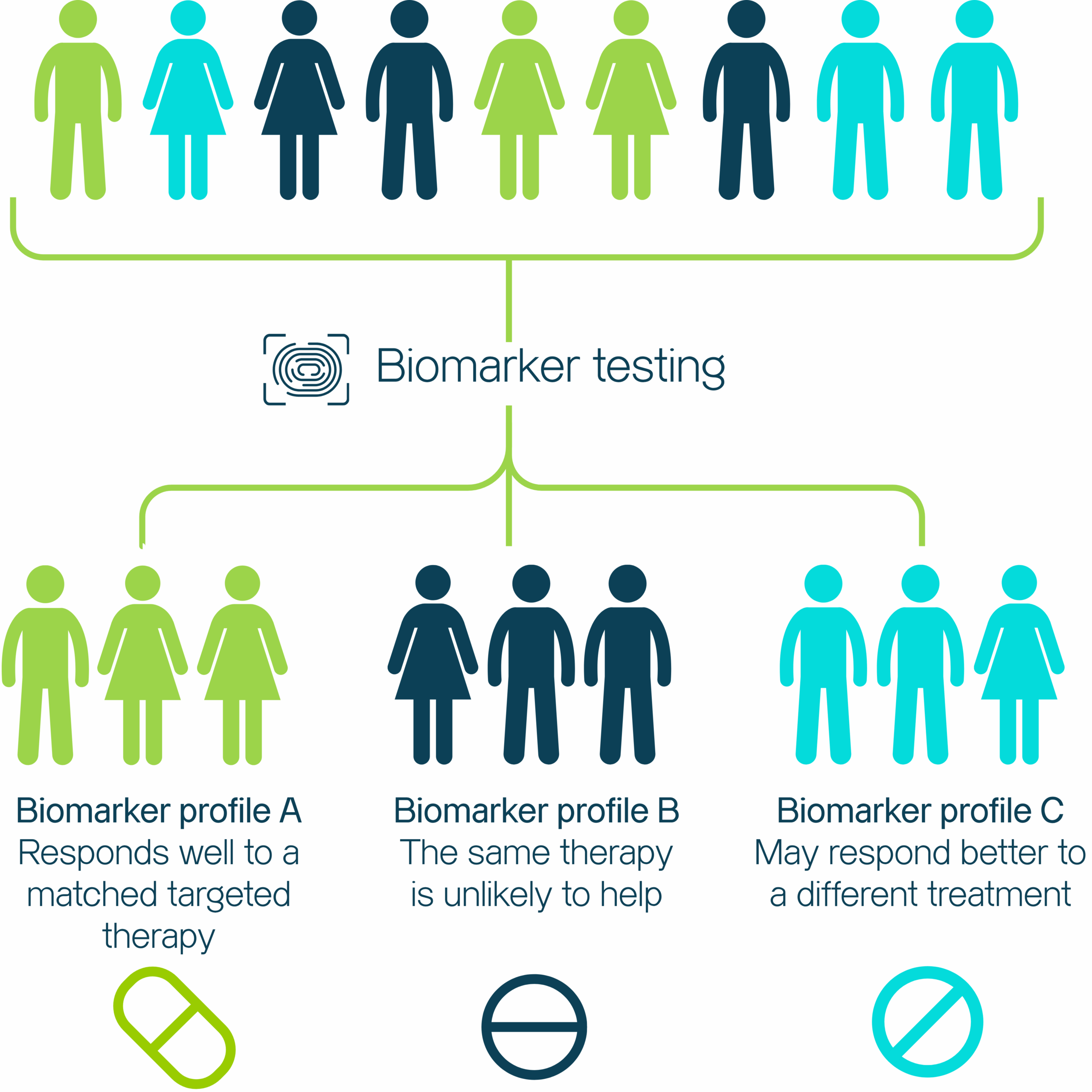
This explains why two people with the same type of cancer may respond differently to the same treatment. One person’s cancer may carry a biomarker linked to a targeted treatment, while another person’s cancer may not.
Biomarker testing helps your care team look beyond the location or type of cancer and examine its unique molecular characteristics.
How can biomarker testing support treatment decisions?
Biomarker testing may help doctors identify treatment options that are more closely matched to the characteristics of your cancer. Depending on the findings and your individual situation, these options may include:
- Targeted therapy
- Immunotherapy
- Other biomarker-matched treatments
- Relevant clinical trials
- Additional testing or follow-up
Testing may also identify biomarkers associated with treatment resistance. These findings could suggest that a treatment is becoming less effective and that other options should be considered.
However, a biomarker result does not make the treatment decision on its own. Your doctor will interpret it alongside your diagnosis, cancer stage, previous treatments, overall health, and other clinical information.
What is ctDNA?
Cancer can change during and after treatment. Understanding these changes may help your doctor see whether treatment is working and plan what should happen next.
As cancer cells grow and die, they may release small fragments of DNA into the bloodstream. These fragments are known as circulating tumor DNA, or ctDNA.
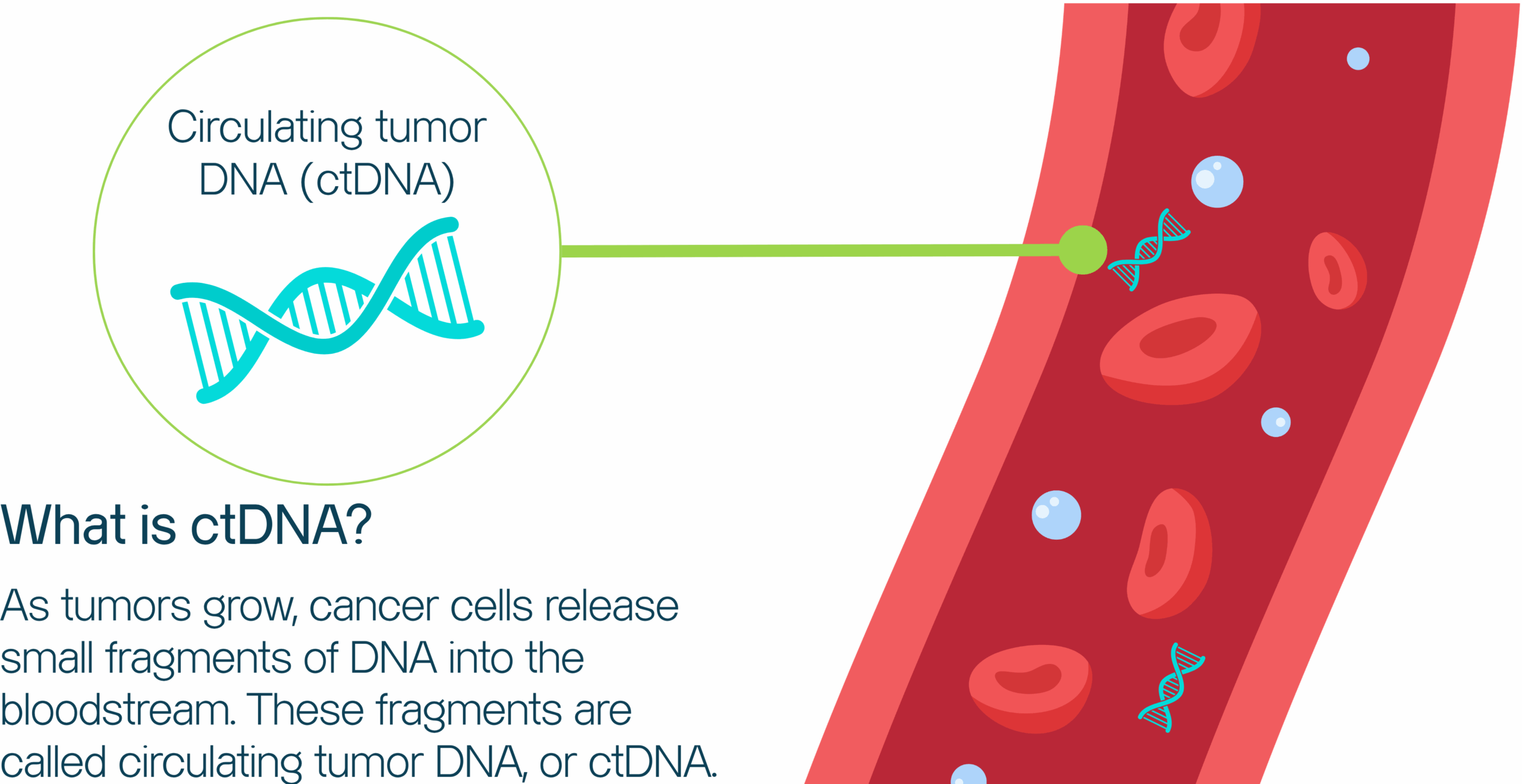
A blood sample can be analyzed to look for these fragments. Changes in ctDNA levels over time may provide information about whether cancer remains, how it is responding to treatment, or whether its molecular features have changed.
Because follow-up ctDNA monitoring can usually be performed using a blood sample, it may allow doctors to observe molecular changes over time without requiring a new tissue sample at every assessment.
What can ctDNA testing tell you?
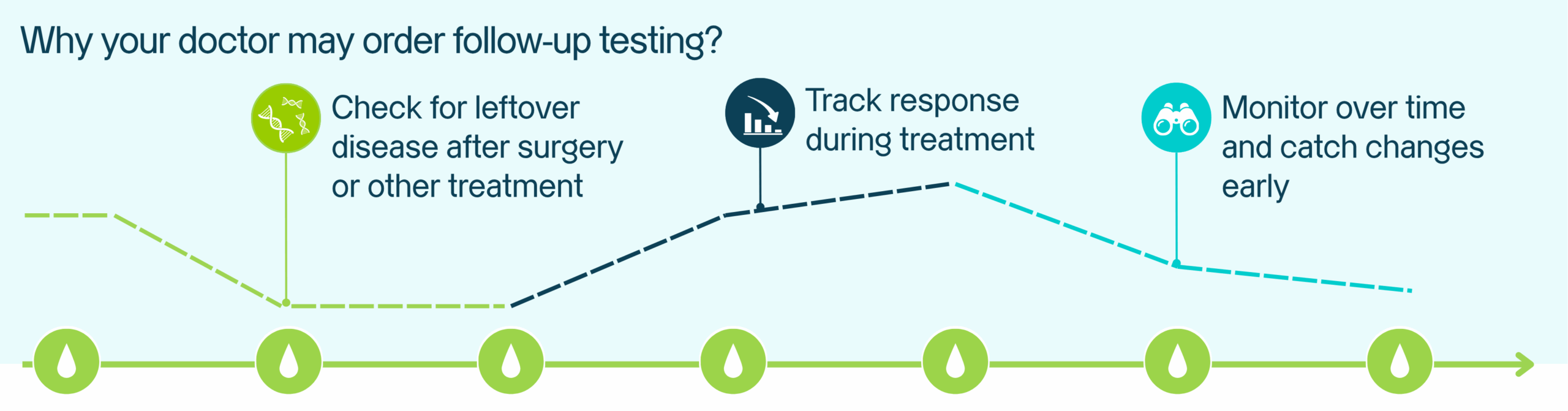
Depending on the type of cancer, its stage, the test used, and the timing of sample collection, ctDNA testing may help doctors:
- Look for molecular signs of cancer remaining after surgery or another treatment
- Monitor how the cancer is responding during treatment
- Follow changes in the amount of ctDNA over time
- Identify new biomarkers that may influence future treatment decisions
- Assess the risk of cancer returning
A single result provides information from one point in time. Testing at different stages of care may offer a clearer picture of how the cancer is changing.
ctDNA testing provides additional information and does not replace scans, tissue testing, physical examinations, or other assessments recommended by your healthcare team. Results should always be interpreted within the context of your complete medical history.
Comprehensive Solutions for Your Entire Care Journey
Gene Solutions offers two complementary solutions that combine comprehensive molecular profiling with personalized ctDNA monitoring to support patients throughout their cancer care journey.
Click here to explore our solutions: Click here
K-4CARE: A Most Comprehensive View
K-4CARE analyzes 515 DNA genes and more than 19,000 RNA genes to provide a comprehensive view of the cancer’s biomarker characteristics.
The results may help doctors explore potential targeted therapies, immunotherapy options, treatment-related safety information, and other clinically relevant findings. The analysis may also provide insights into germline mutations, virus-linked findings, chromosomal alterations, and the possible origin of a tumor when the primary site is unclear.
For ongoing monitoring, K-4CARE can track 50 personalized mutations and more than 100 cancer-related genes in the blood over time. It is designed to detect very small amounts of ctDNA, with a stated detection limit as low as 0.005%.
K-TRACK: A Focused Insights
K-TRACK analyzes 164 cancer-related genes to help identify potential targeted therapies, immunotherapy options, treatment-related safety information, and germline findings.
For ongoing monitoring, K-TRACK can follow 20 personalized mutations and more than 100 cancer-related genes over time. It is designed to detect small amounts of ctDNA in the blood, with a stated detection limit as low as 0.01%.
Ask your doctor whether biomarker and ctDNA testing may be appropriate for your cancer care journey.


