

Screening for hereditary cancer risk in men
Recognizing the hereditary risk of prostate, colorectal and stomach cancers.
(Results are received within 14 days)


Is male cancer dangerous?
Prostate cancer
is prevalent at number 1
1 in
9people
will develop the disease
Colorectal cancer
is prevalent at number 1
1 in
25people
will develop the disease
Genetics
Lifestyle
Environment
Major etiologies of cancer
The mencare.name.name genetic cancer screening test supports the analysis of cancer-related genetic components. Learn more about the cancer detection, monitoring, and treatment tests offered by Gene Solutions.The development of cancer in individuals results from the interaction of three factors:
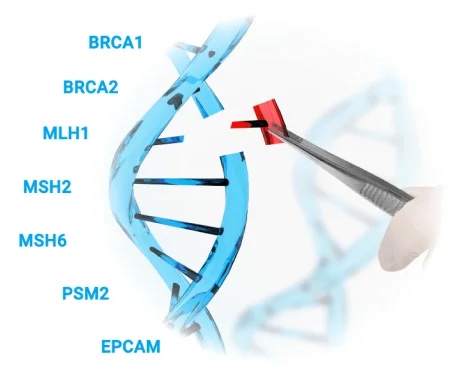
7 genes related to cancers in men
Why should you take the MenCare genetic cancer screening test?
Scope of the test
MenCare Gene Solutions analyzes mutations on ten genes to determine the possible risk of the three most common hereditary cancers in men today: prostate, stomach, and colorectal. The testing genes include BRCA1, BRCA2, MLH1, MSH2, EPCAM, PMS2, MSH6, APC, MUTYH, and CDH1.
The test is recommended by

American Society of Clinical Oncology

American Cancer Society

National Comprehensive Cancer Network

Ministry of Health
Testing candidates
Family history
of cancer
Personal history
of a tumor

Concerns and worries
regarding genetic health
What do you get from the test package?

10 genes associated with 3 hereditary cancers are analyzed
Detects mutations in family-inherited genes that increase the risk of common types of cancer. The test results help you evaluate the probability that you will have certain cancers for yourself and your family

Genetic counseling from geneticists
The team of experts and geneticists at Gene Solutions are always available to accompany you before and after each test and provide recommendations based on the results

Modify the treatment plan
The results assist in tracking cancer/chronic disease progression and planning effective interventions. In addition, it is possible to improve the efficacy of treatment by choosing an appropriate regimen

Guaranteed quality in every result
Next-generation sequencing technology (Illumina) from the United States was developed by Vietnam's leading medical advisors and a team of professionals. In only 14 days, a high-quality lab that complies with ISO standards will provide you with more than 99-percent-correct test results

Simple to do and cost-effective
The USA standard DNA sampling kit, which allows you to collect samples at home in less than a minute, is painless and incredibly convenient

Free testing for family members
If the initial test identifies a mutation, three family members will receive free testing. Take the initiative to prevent and protect your family's health
Testing process

Pre-test counselling

Blood collection and extracellular DNA separation

Sequencing of cell-free DNA


