

Mitochondrial diseases
Testing for 37 mtDNA genes in mitochondria (outside the cell nucleus). Mitochondrial diseases are chronic, inherited diseases that primarily affect energy-consuming organs such as the liver, kidneys, pancreas, brain, digestive system, eyes, inner ear, muscles, and blood cells


If caused by a mutation in the mitochondrial DNA, the disease would be inherited according to the following rule
Affected father
unaffected children
Affected mother
affected children
Cause of mitochondrial diseases: Mitochondrial disease can be caused by genetic changes in the nucleus or in the mitochondrial genes.
Types of inheritance: If caused by a mutation in the nuclear DNA, the disease would be inherited according to the rules of monogenic disease (dominant, recessive, sex-linked and so on).
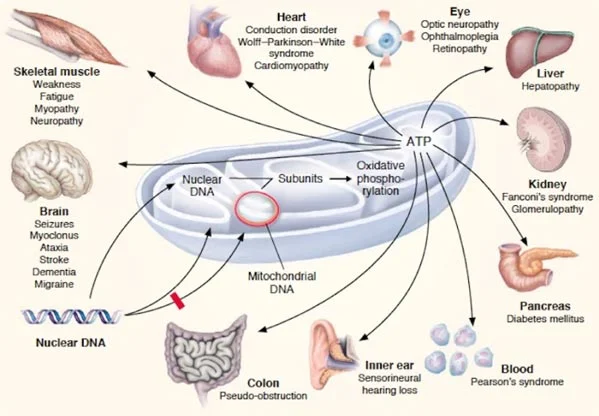
What are Mitochondrial Diseases?
Mitochondrial diseases are hereditary chronic diseases, which are normally inherited syndromes that occur when mitochondria do not produce enough ATP for cells. Mitochondrial disease affects mainly energy-consuming organs such as the liver, kidneys, pancreas, brain, digestive system, eyes, inner ear, muscles, and blood cells.
Testing procedure
Analysis of mitochondrial genes can be performed first, and if no mutations are found, further sequencing of the genes in the nucleus (WES or CES-G4500) can be performed, or vice versa.
G4500, WES, Diagsure

Mitochondrial genes - mtDNA
The scope of the test
37 genes mtDNA
Test participants
Paediatric patients/patients with suspected mitochondrial disease: Mitochondrial dysfunction should be considered in the differential diagnosis of any progressive multiorgan (three or more organs) disorder/disease, both in children and adults, because mitochondrial disorders can appear at any age.

Genetic consultation with our doctors
Besides you and your family before and after the test.


