
Beyond Imaging: Multi-omics and AI Advance Lung Cancer Screening at Vietnam Respiratory Society Congress 2026
Regional respiratory experts explored how circulating tumor DNA, AI, and multi-omics could complement LDCT, refine pulmonary-nodule risk assessment, and support earlier cancer detection.
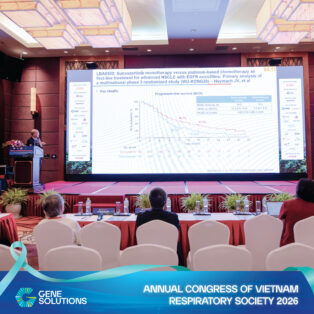
Under the theme “Cooperation for Lung Health,” the Annual Congress of the Vietnam Respiratory Society 2026 brought together regional experts in respiratory medicine, oncology, and molecular diagnostics from 24 to 26 July.
A central topic across the scientific program was how emerging molecular technologies could address some of the persistent challenges in lung cancer screening and management, from assessing pulmonary nodules detected on imaging to guiding more personalized treatment decisions.

Adding molecular insight to lung cancer screening
Low-dose computed tomography, or LDCT, remains the cornerstone of lung cancer screening. However, imaging can detect pulmonary nodules without always determining whether they are malignant, potentially leading to additional scans, invasive procedures, and extended clinical follow-up.
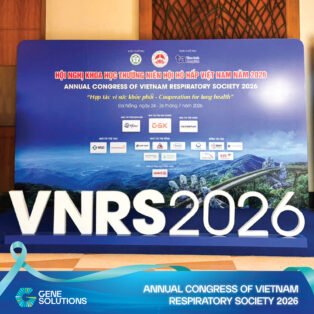
At the congress, experts discussed how circulating tumor DNA, or ctDNA, together with AI and multi-omics, could add a molecular layer of information to established imaging and clinical pathways. These technologies are being studied for their potential to refine risk assessment and help clinicians determine which individuals may benefit from further diagnostic investigation.
MCED as a complementary screening approach
A key scientific highlight came from Prof. David C.L. Lam, Chief of the Respiratory Medicine Division at The University of Hong Kong, who presented international evidence on the evolving role of blood-based testing in cancer screening and triage.
Prof. Lam explained how multi-cancer early detection, or MCED, assays analyze molecular signals in blood to detect cancer-associated patterns across multiple cancer types. These signals can include DNA methylation, fragmentomic characteristics, genetic alterations, and other biological features associated with tumor-derived cell-free DNA.
Unlike approaches that depend on a single biomarker, multi-omics technologies combine multiple signal types with machine-learning algorithms. This may provide a more comprehensive view of cancer biology and strengthen the detection of cancer-associated signals, particularly in early-stage disease.
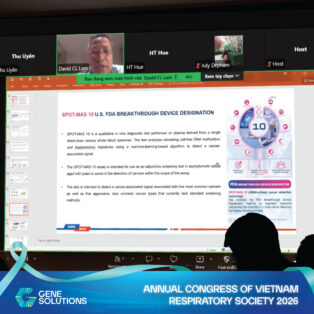
Prof. Lam highlighted SPOT-MAS as an example of an AI-powered, multi-omics MCED technology developed in Asia. His presentation described how the platform integrates methylation and fragmentomic features of cell-free DNA to detect cancer-associated signals across multiple cancer types, including lung cancer.
The presentation also noted that SPOT-MAS 10 received Breakthrough Device Designation from the U.S. Food and Drug Administration, representing an important global regulatory milestone for a multi-cancer screening technology originating from Asia.
Breakthrough Device Designation is intended to facilitate the development and regulatory review of qualifying medical devices. It does not constitute FDA approval, clearance, or marketing authorization.
Prof. Lam also emphasized that MCED is being developed to complement, rather than replace, guideline-recommended cancer screening, including LDCT for eligible individuals.
Supporting pulmonary-nodule assessment in Vietnam
The potential role of molecular technologies in lung cancer assessment was further explored through presentations from Vietnamese clinical experts.
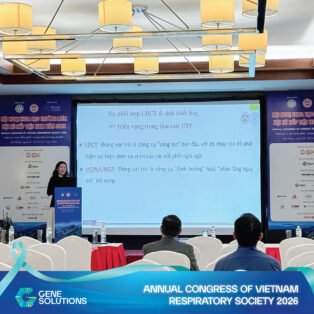
Dr Phung Nguyen Thi of Cho Ray Hospital discussed how combining LDCT with ctDNA-based testing could help refine risk stratification for individuals with pulmonary nodules detected on imaging. Such an integrated approach could potentially provide additional evidence when clinicians are considering follow-up imaging or further diagnostic investigation.
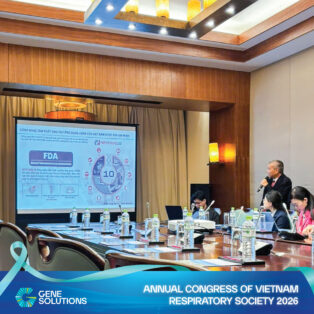
Prof. Nguyen Huu Uoc of Tam Anh General Hospital presented clinical experience from Vietnam involving the integration of chest CT, Lung-RADS risk stratification, and SPOT-MAS Lung. The approach is being explored for its potential to provide additional molecular information when assessing pulmonary nodules at higher risk of malignancy.
While MCED focuses on detecting cancer-associated signals across multiple cancer types, SPOT-MAS Lung is intended to address a more specific clinical need: supporting the assessment of pulmonary nodules identified through imaging. This distinction reflects how different molecular-testing approaches may contribute at different points in the lung cancer screening and diagnostic pathway.
From earlier detection to personalized treatment
The congress also examined how molecular technologies are influencing treatment after a lung cancer diagnosis.

Assoc. Prof. Vu Le Thuong of University Medical Center Ho Chi Minh City reviewed key scientific updates from AACR and ASCO 2026, highlighting the growing role of liquid biopsy and ctDNA testing in personalizing treatment for non-small cell lung cancer.
The expanding use of genomic profiling is enabling clinicians to better understand the biology of individual tumors and make more informed treatment decisions based on actionable biomarkers.
Building an integrated screening pathway
The scientific discussions at the congress reflected a broader shift in lung cancer care. The future of screening is unlikely to be defined by imaging or ctDNA testing alone. Instead, the opportunity lies in combining their respective strengths.
Imaging can reveal structural abnormalities in the lungs, while multi-omic analysis of cell-free DNA can provide information about molecular signals associated with cancer. When integrated with clinical risk factors and established assessment frameworks such as Lung-RADS, these technologies may offer a more complete view of an individual’s cancer risk.
As clinical evidence continues to develop, cooperation among respiratory specialists, oncologists, radiologists, molecular scientists, and diagnostic laboratories will be essential to translate these innovations into responsible and effective clinical pathways.
Gene Solutions continues to advance ctDNA and multi-omics technologies designed to support earlier cancer detection, pulmonary-nodule assessment, and precision oncology.


