
Breaking Findings Reported in ESMO Real World Data and Digital Oncology Journal Reaffirm Clinical Validation of K-TRACK Circulating Tumor DNA in Patients with Resected Colorectal Cancer
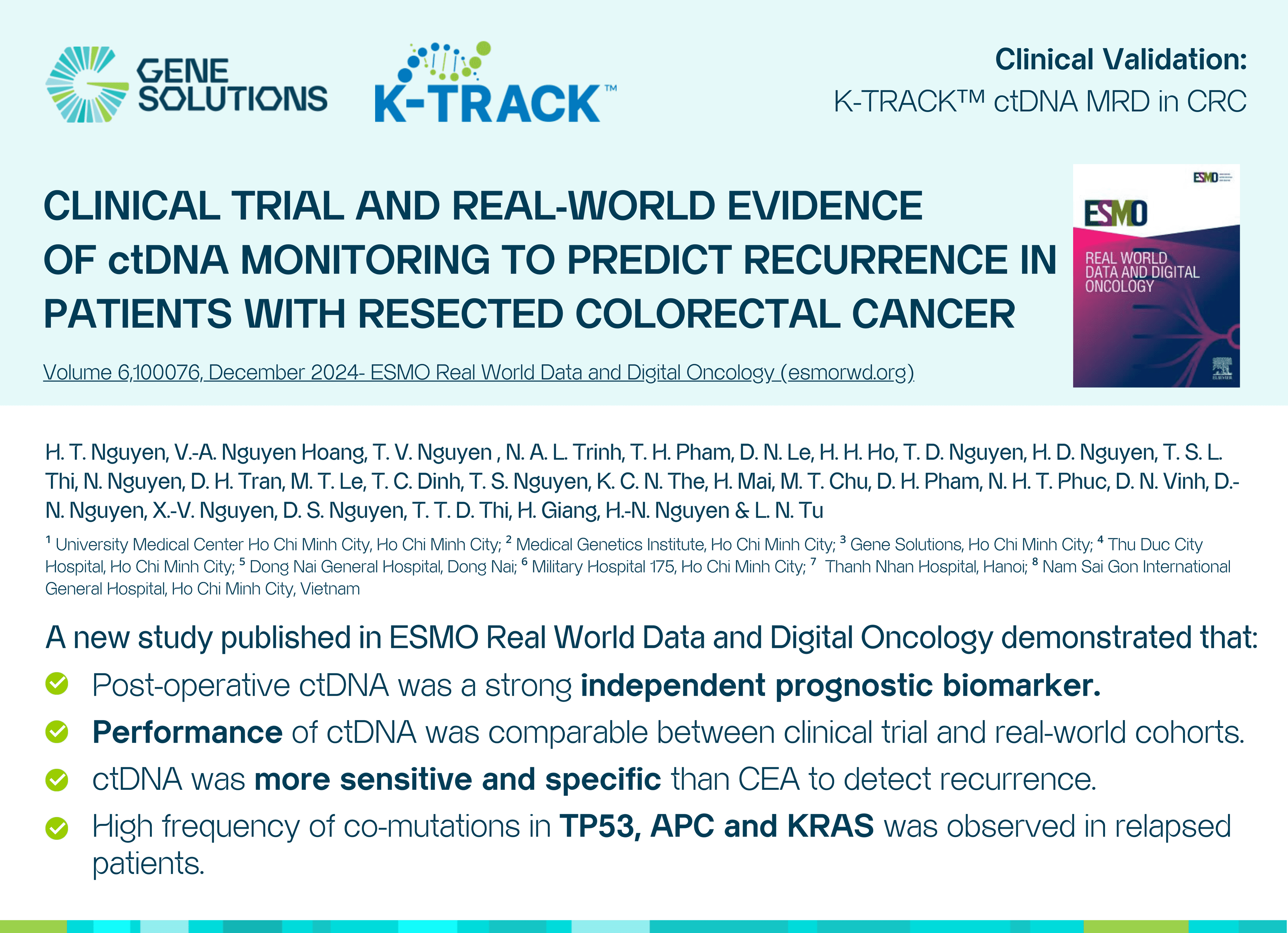
A recent study published in the ESMO Real World Data and Digital Oncology journal has revealed the significant prognostic value of circulating tumor DNA (ctDNA) in predicting recurrence in colorectal cancer (CRC) patients. This publication combines clinical trial data with real-world evidence of the K-TRACK assay from Gene Solutions, offering compelling insights for oncologists and surgeons into how ctDNA could transform post-surgery surveillance for CRC patients.
Key Findings of the Study:
- Enhanced Prognostic Value: Minimal Residual Disease (MRD) ctDNA detection 2-4 weeks post-operatively was strongly associated with shorter disease-free survival (DFS).
- Early Recurrence Detection: During follow-up, ctDNA showed 100% sensitivity and specificity in detecting recurrence, with a median lead time of 8 months before clinical diagnosis. ctDNA was more sensitive and specific than carcinoembryonic antigen (CEA) to detect recurrence.
- Personalized Treatment Potential: Common mutations detected in ctDNA among relapsed patients were in the TP53, APC, and KRAS genes. These mutations, detected in both clinical trials and real-world practice, could help stratify patients for targeted therapies and further personalize treatment approaches.
This research not only proves ctDNA MRD as a highly accurate tool to monitor recurrence in colorectal cancer patients but also underscores the need for continued advancements in precision medicine to enhance cancer care in underrepresented populations.
For the full-text of the publication, please click here to access: Clinical trial and real-world evidence of circulating tumor DNA monitoring to predict recurrence in patients with resected colorectal cancer – ESMO Real World Data and Digital Oncology
For a complete summary of the publication, please click here to download the PDF: ESMO K-TRACK CRC Publication Summary
Implications for Oncologists and Healthcare Providers:
The findings from this study highlight the critical role of ctDNA in the early detection of cancer recurrence, which can significantly improve patient outcomes. Oncologists and healthcare providers are encouraged to consider integrating ctDNA monitoring into their post-operative surveillance protocols for CRC patients. This approach not only aids in timely intervention but also supports the move towards more personalized and effective cancer treatment strategies.
Future Directions:
The study paves the way for further research into the application of ctDNA in other cancer types and its potential to revolutionize cancer care globally. Continued collaboration between clinical researchers, hospitals and genetic institutes will be essential in advancing the use of precision medicine tools like K-TRACK to benefit a broader patient population.
Stay in touch with us to receive more updates for ctDNA, MRD findings in other cancers.
#ColorectalCancer #CirculatingTumorDNA #ctDNA #PrecisionMedicine #CancerRecurrence #MinimalResidualDisease #MRD #GeneSolutions #CancerResearch


