
Next-generation AI-Powered Multi-Cancer Early Detection Takes Center Stage at Gene Solutions Hong Kong Symposium During MMMC 2026
The conversation around cancer screening is changing. For decades, cancer screening has largely focused on detecting individual cancers through separate tests.
With advances in Artificial Intelligence (AI) and multi-omics technologies, new possibilities are emerging for identifying multiple cancers from a single blood draw — driving growing interest among healthcare professionals across the region.
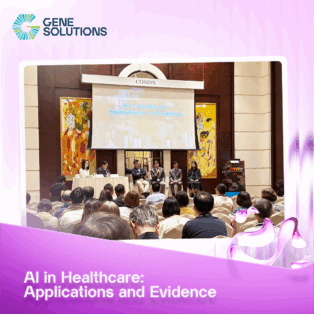
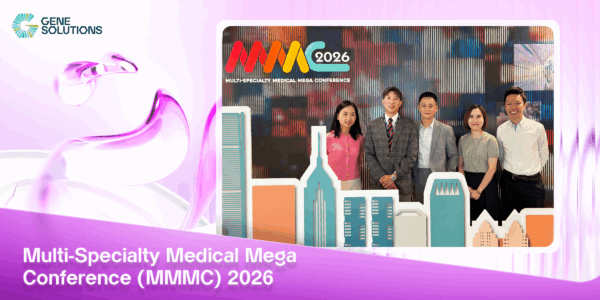
This topic took center stage at the Gene Solutions Hong Kong’s Symposium during the Multi-specialty Medical Mega Conference (MMMC) 2026, under the track “AI in Healthcare: Applications and Evidence.” As one of the region’s largest multidisciplinary medical congresses, MMMC brought together more than 1,000 healthcare professionals across specialties for continuing medical education and professional exchange.
Drawing on the latest global evidence and real-world experience, Dr. Brendan Chia Seng Hup, Senior Consultant and Director of Radiation Oncology at Raffles Hospital Singapore, delivered an insightful presentation titled “Next-Generation AI-Powered MCED Multi-omics Technology: Transforming Early Cancer Detection” on four key areas:
🔹 Why current screening approaches may no longer be enough: The session emphasized the limitations of current single‑cancer screening methods in Hong Kong and Singapore, including high false‑positive rates, late diagnoses, and rising incidence among younger populations. These gaps underscore the urgent need for more effective, accessible, and comprehensive screening approaches.
🔹 How AI-powered multi-omics technologies are enabling a new generation of cancer screening: By integrating genomic, epigenomic, and fragmentomic signals, advances in multi-omics technologies are expanding new possibilities in multi-cancer detection from a single blood draw.
🔹 From evidence to implementation: The talk also highlighted the importance of translating MCED results into practical clinical pathways.
🔹 Real-world evidence supporting MCED: Real‑world data and prospective studies, including K-DETEK, support the continued evaluation of technologies such as SPOT-MAS as a blood-based multi-cancer early detection approach.
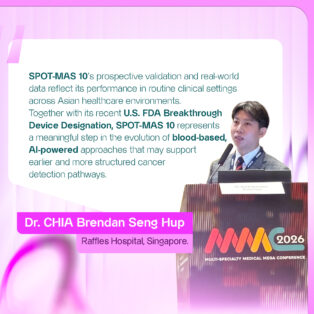
As Dr Brendan Chia noted:
“For clinicians, the value of multi-cancer early detection lies not only in detecting cancer-associated signals, but also in how those results are translated into timely diagnostic work-up, appropriate referral, and multidisciplinary care. SPOT-MAS prospective validation and real-world data reflect its performance in routine clinical settings across Asian healthcare environments. Together with its recent U.S. FDA Breakthrough Device Designation, SPOT-MAS represents a meaningful step in the evolution of blood-based, AI-powered approaches that may support earlier and more structured cancer detection pathways.”
The session concluded with practical guidance for general practitioners and specialists on integrating multi-cancer detection into routine health checks, consultations, and risk-based screening strategies.
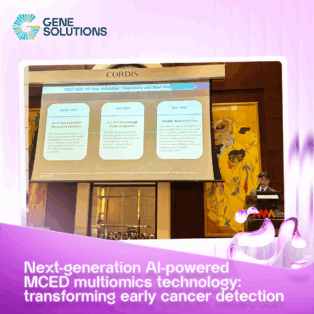
The discussion sparked interest among healthcare professionals in advancing AI-driven multi-omics screening and accelerating the adoption of ctDNA-based multi-cancer detection in Hong Kong—and a shared ambition to detect cancer earlier, more broadly, and with greater precision.
- Read about the FDA Breakthrough Device Designation: https://genesolutions.com/news/fda-breakthrough-device-designation-marks-major-milestone-for-gene-solutions-spot-mas-10-multi-cancer-screening-test
- Learn more about SPOT-MAS
Disclaimer: Breakthrough Device Designation is not FDA approval, clearance, or marketing authorization. SPOT-MAS 10 remains subject to future FDA review.


